
Globally, food production and energy supply are becoming closely linked. Climate change and rising demand are forcing countries to rethink land and water use. The FAO estimates agriculture uses nearly 70% of global freshwater, while the IEA highlights growing global energy demand. Connecting agriculture with renewable energy is now a practical necessity.
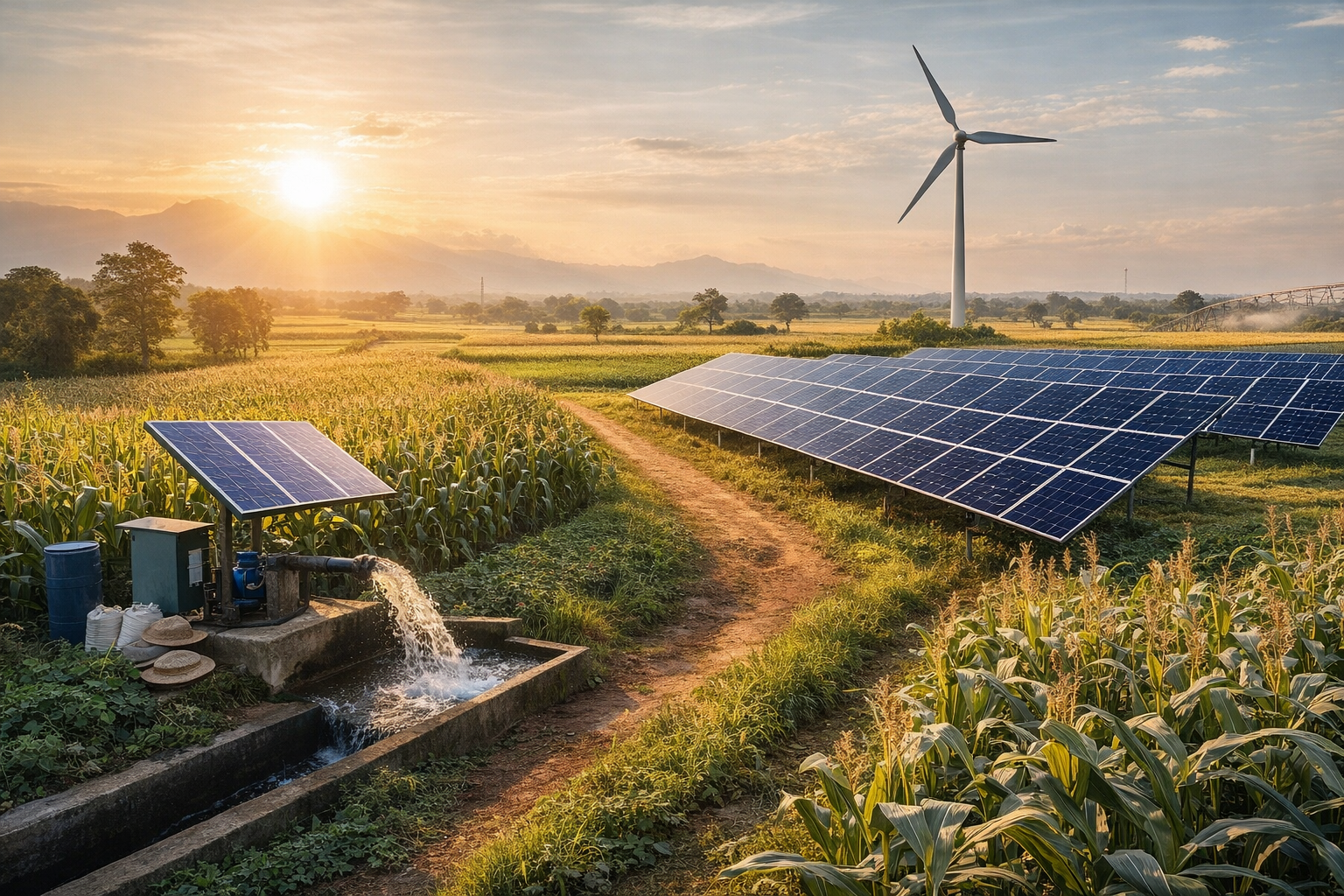
Today, farms are becoming multi-functional sustainability spaces. Solar irrigation, renewable-powered cold storage, and energy-efficient systems are helping farmers reduce costs and improve productivity. The International Renewable Energy Agency (IRENA) notes decentralized renewable energy is strengthening rural economies. In India, expanding solar and rural renewable programs are helping farmers reduce diesel use and improve energy reliability.
This shift is creating integrated sustainability ecosystems where food security, clean energy access, climate action, and rural economic growth progress together. The World Bank highlights agriculture as a key sector for climate adaptation and sustainability investment. In India, where agriculture supports a large share of rural livelihoods, combining clean energy with farming can improve income stability and climate resilience. The future of sustainable development depends on how effectively countries connect agriculture and renewable energy to build productive and environmentally responsible systems.