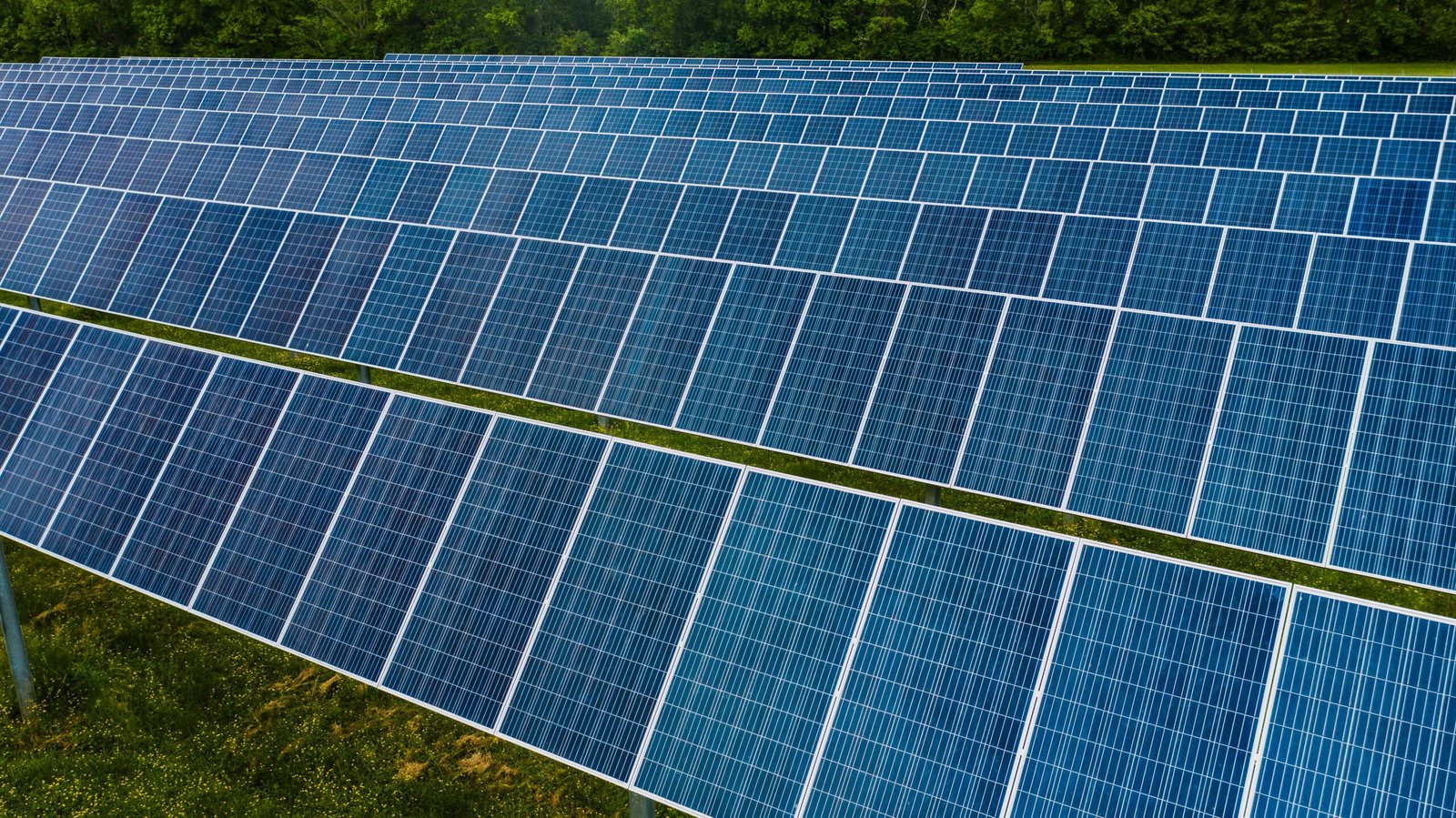

(Image Credit – Pexels). As of 2026, the global agrivoltaics market has surged to $5.75 billion, driven by a 11% annual growth rate as nations integrate food and energy production to solve land scarcity (Source: Research and Markets, 2026). In arid regions, solar panels act as a “thermal shield,” reducing soil evaporation by 30% and boosting yields for shade-tolerant crops like leafy greens and tomatoes by up to 15% (Source: IEEFA/Farmonaut, 2025). This synergy allows a single plot of land to be 70% more productive than traditional monoculture farming.
Under India’s PM-KUSUM scheme (extended to March 2026), farmers are transforming into energy producers with subsidies covering up to 60% of solar installation costs. Recent data shows that agrivoltaic systems can increase an Indian farmer’s annual income by 30% per acre through a combination of crop sales and electricity exports. In states like Gujarat and Maharashtra, this “third crop” provides a stable monthly revenue of roughly ₹25,000 to ₹65,000 per acre per year, effectively de-risking the farm against monsoon volatility.
According to the Fraunhofer Institute (2025), these systems are now a core pillar of “Climate-Resilient Agriculture,” particularly in the Asia-Pacific region, which now commands over 60% of the global market share. By 2030, the integration of Carbon-Credit Stacking will likely allow Indian smallholders to monetize the carbon sequestered in soil beneath their solar arrays, making the farm a triple-threat asset for the green economy.