
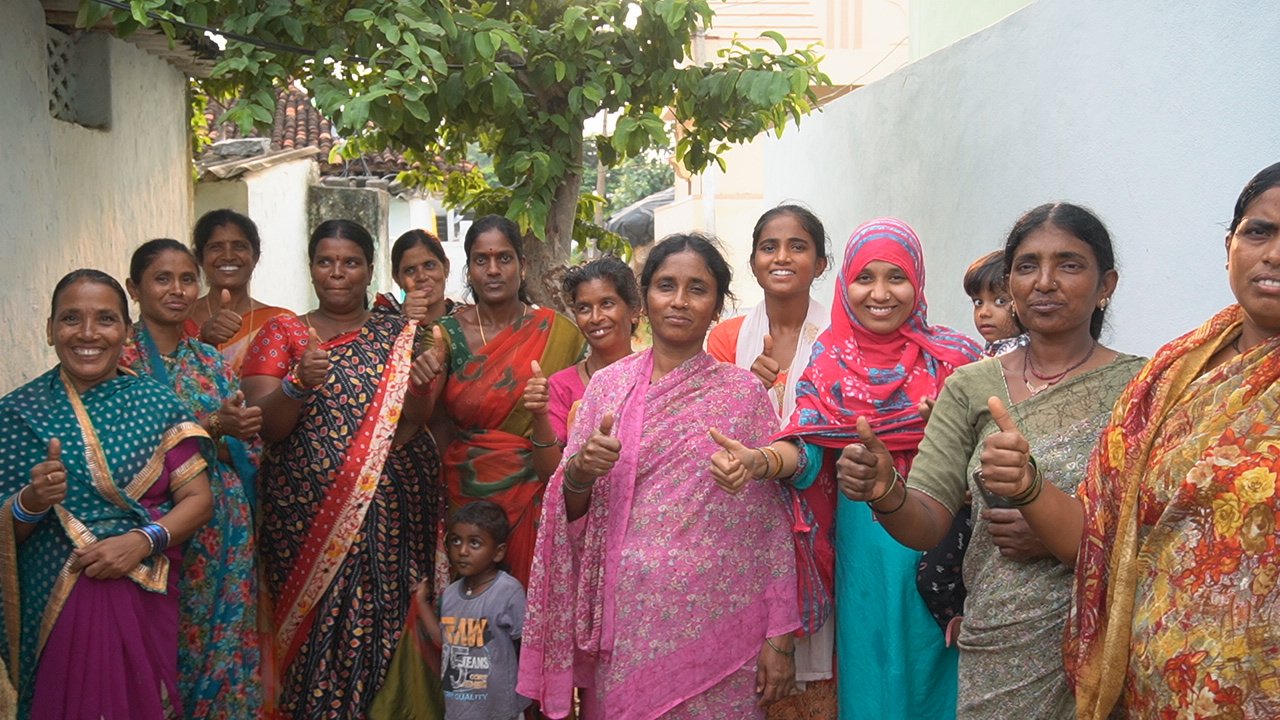

(Image Credit – CES). In development conversations, impact is often measured in numbers. But on the ground, change is measured in livelihoods secured, confidence restored, classrooms energized, and villages illuminated after sunset. Over the past six years, Charvi Empowerment Society (CES) has quietly built a model of transformation that begins where it matters most — at the community level.
Since 2019, the organization has worked across 11 Indian states, reaching lacs of individuals. What stands out is not just the scale, but the composition of that impact: over 65% of beneficiaries are women. This is not incidental. It reflects a deliberate philosophy — empower women, and you strengthen families, local economies, and future generations.
Reimagining Livelihoods
At the heart of community development lies economic dignity. In regions where informal and seasonal labor dominate, income instability often traps households in cycles of uncertainty. CES has approached this challenge through market-aligned skill development, entrepreneurship training, and enterprise support.
Youth are trained in employable skills tied to real market demand. Women are guided to launch and sustain micro-enterprises. Mentorship and handholding extend beyond training rooms, ensuring ideas mature into viable ventures.
The result is not merely increased income — it is financial resilience. Households gain stability. Women gain agency. Local economies gain new engines of growth.
Women as Stewards of Sustainable Agriculture
In rural India, women play a central role in agriculture, often without recognition or resources. CES has placed women farmers at the forefront of rural transformation.
Through climate-resilient farming practices, agroforestry, soil and water conservation, and diversified livelihood strategies, women are equipped to increase productivity while preserving ecological balance. By blending traditional knowledge with scientific approaches, CES strengthens farm sustainability without disrupting community wisdom.
Improved yields, enhanced food security, and better incomes are tangible outcomes. Equally important is the shift in perception — women are no longer seen only as contributors to agriculture, but as decision-makers and leaders within it.
Greener Villages, Safer Communities
Environmental responsibility is not treated as a parallel agenda; it is embedded within the development framework. Large-scale plantation drives, watershed development, pond rejuvenation, and soil conservation initiatives have improved water security and strengthened agricultural resilience.
In several villages, solar street lights now illuminate roads that once turned dark and unsafe at dusk. For women, children, and elderly residents, this simple intervention has transformed mobility and safety. At the same time, clean energy adoption contributes to reduced carbon emissions and long-term environmental sustainability.
The connection between ecology and equity becomes visible here: safer spaces and sustainable resources reinforce each other.
Education That Expands Horizons
The future of any community rests in its classrooms. CES’s interventions in government schools focus on foundational learning, digital education, and STEM laboratory installations.
Students engage in hands-on, inquiry-based learning rather than passive memorization. Teachers receive capacity-building support to deliver more interactive and concept-driven instruction. Thousands of students — especially girls — are now exposed to science and technology in ways that inspire curiosity rather than intimidation.
Education, in this context, becomes more than academic achievement; it becomes a pathway to aspiration.
Healthcare Within Reach
In underserved districts, healthcare access is often limited by geography and cost. CES addresses this gap through Mobile Medical Units, community health camps, and preventive healthcare awareness programs.
These initiatives bring essential services closer to remote communities, enabling early diagnosis and reducing the financial burden of delayed treatment. Preventive education fosters healthier practices, strengthening overall community well-being.
Healthcare here is not reactive — it is proactive and accessible.
Governance That Strengthens Trust
Behind the visible impact lies a structured institutional backbone. An active Board with social sector experience, a dedicated advisory committee, and a professional operations team guide implementation. Monitoring and evaluation frameworks ensure that outcomes are measurable, transparent, and replicable.
Strong governance is not a background detail — it is the foundation that allows scaling without compromising quality.
A Model Rooted in Community
Between 2019 and 2025, Charvi Empowerment Society has demonstrated that development works best when communities are partners rather than passive recipients. By integrating livelihoods, gender equity, environmental sustainability, education, and healthcare into a unified approach, CES offers a blueprint for inclusive growth.
The story unfolding across these 11 states is not one of isolated projects. It is a narrative of interconnected progress — where empowered women cultivate resilient farms, skilled youth build stable incomes, children explore new academic frontiers, and villages move toward safer and greener futures.
Change, as this journey illustrates, does not begin in conference rooms. It begins in communities — and when nurtured with intention, it grows into lasting transformation.