


Seeing Development Through the National Lens
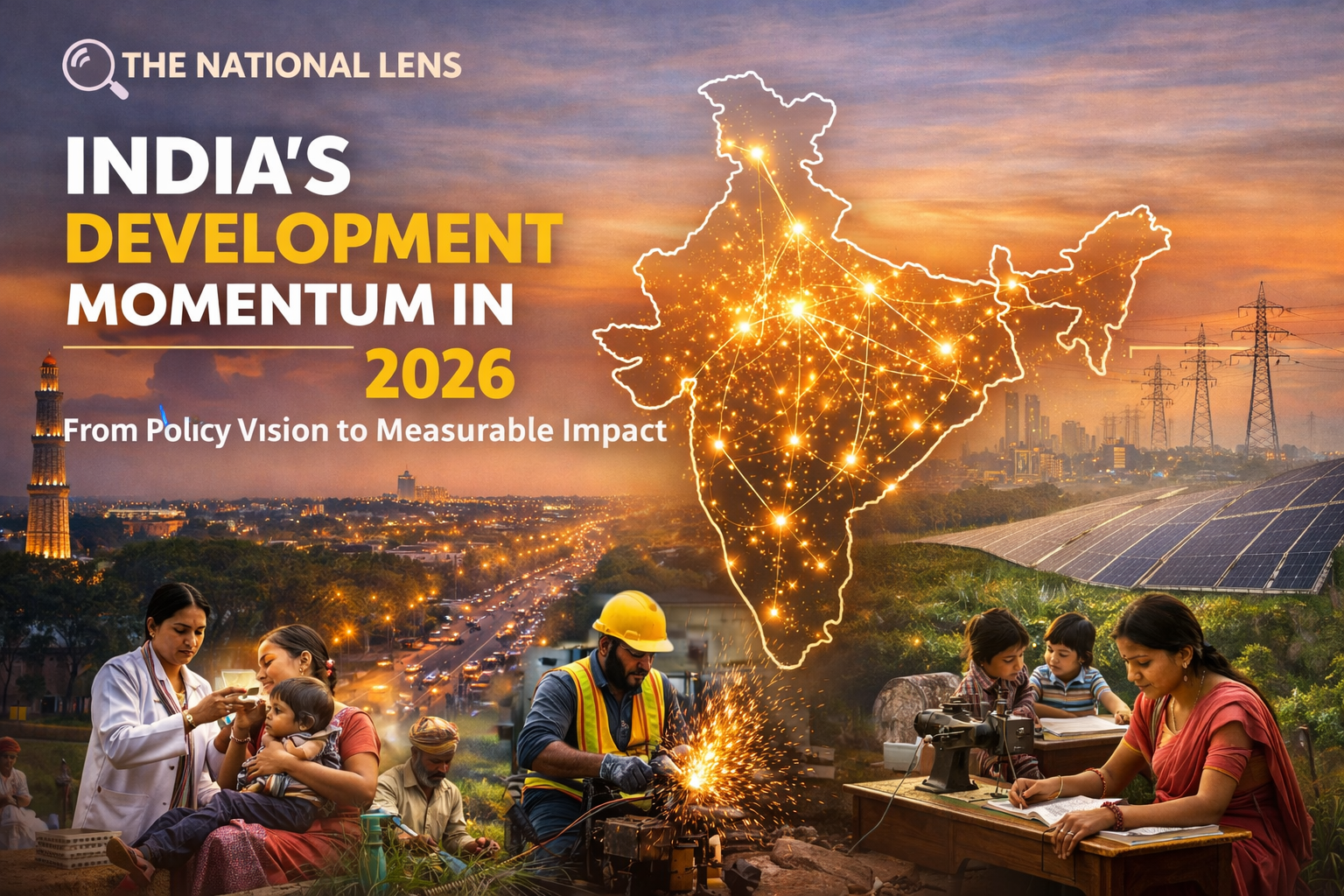
India’s development journey in 2026 is increasingly defined by convergence — where government policy, CSR investments, and grassroots execution are working in closer alignment than ever before. Under The National Lens, we examine how national priorities are translating into measurable outcomes on the ground, and how NGOs and CSR partners are shaping this transformation responsibly and at scale.
This perspective goes beyond announcements and allocations. It focuses on implementation, accountability, and impact.
National Priorities Driving the Development Agenda
Across ministries and departments, the focus has shifted from activity-based reporting to outcome-led governance. Key national priorities currently shaping the development ecosystem include:
- Strengthening foundational education and digital learning access
- Enhancing youth employability through industry-aligned skilling
- Advancing women-led livelihoods and financial inclusion
- Improving urban and rural sanitation, health, and nutrition
- Accelerating climate-resilient and environmentally sustainable solutions
These focus areas are closely aligned with CSR Schedule VII, making them critical touchpoints for corporate and foundation-led interventions.
The Role of NGOs in National Execution
NGOs continue to serve as last-mile implementation partners, translating policy intent into community-level change. Their growing emphasis on data collection, impact measurement, and compliance has increased confidence among CSR donors, government bodies, and multilateral agencies.
Under the national framework, effective NGOs are:
- Aligning projects with ministry guidelines and state action plans
- Adopting outcome-based reporting systems
- Building governance and transparency as core strengths
- Scaling proven models across districts and states
CSR’s Strategic Shift: From Compliance to Co-Creation
CSR in India is maturing rapidly. Corporates are moving beyond mandatory compliance toward long-term, thematic investments aligned with national missions. This shift is enabling:
- Multi-year development programs
- Stronger monitoring and evaluation systems
- Deeper collaboration with credible NGO partners
- Integration of ESG and sustainability goals
CSR is no longer peripheral — it is becoming a strategic development instrument.
Spotlight on Emerging National Trends
Through The National Lens, several trends are becoming increasingly visible:
- District-focused interventions aligned with Aspirational District Programme goals
- Increased use of technology for monitoring, learning, and reporting
- Greater emphasis on women, youth, and climate resilience
- Cross-sector partnerships involving government, CSR, NGOs, and academia
These trends signal a move toward systemic, scalable, and sustainable impact.
Why the National Lens Matters
A national perspective is essential for:
- Identifying policy-aligned funding opportunities
- Positioning NGOs for large-scale partnerships
- Helping CSR teams invest with clarity and confidence
- Ensuring development efforts contribute to long-term national goals
By viewing impact through this lens, stakeholders can move from isolated success stories to cohesive national progress.
Looking Ahead
As India advances toward its development milestones, the success of the ecosystem will depend on collaboration, credibility, and clarity of purpose. The coming years will reward organizations that can demonstrate not just intent, but measurable, replicable impact aligned with national priorities.
The National Lens | Global Impact Review
Tracking India’s development journey with insight, integrity, and impact.